Forcing kids to say sorry rarely builds empathy. Learn a better approach to coach thoughtful, genuine apologies that repair trust and teach responsibility.
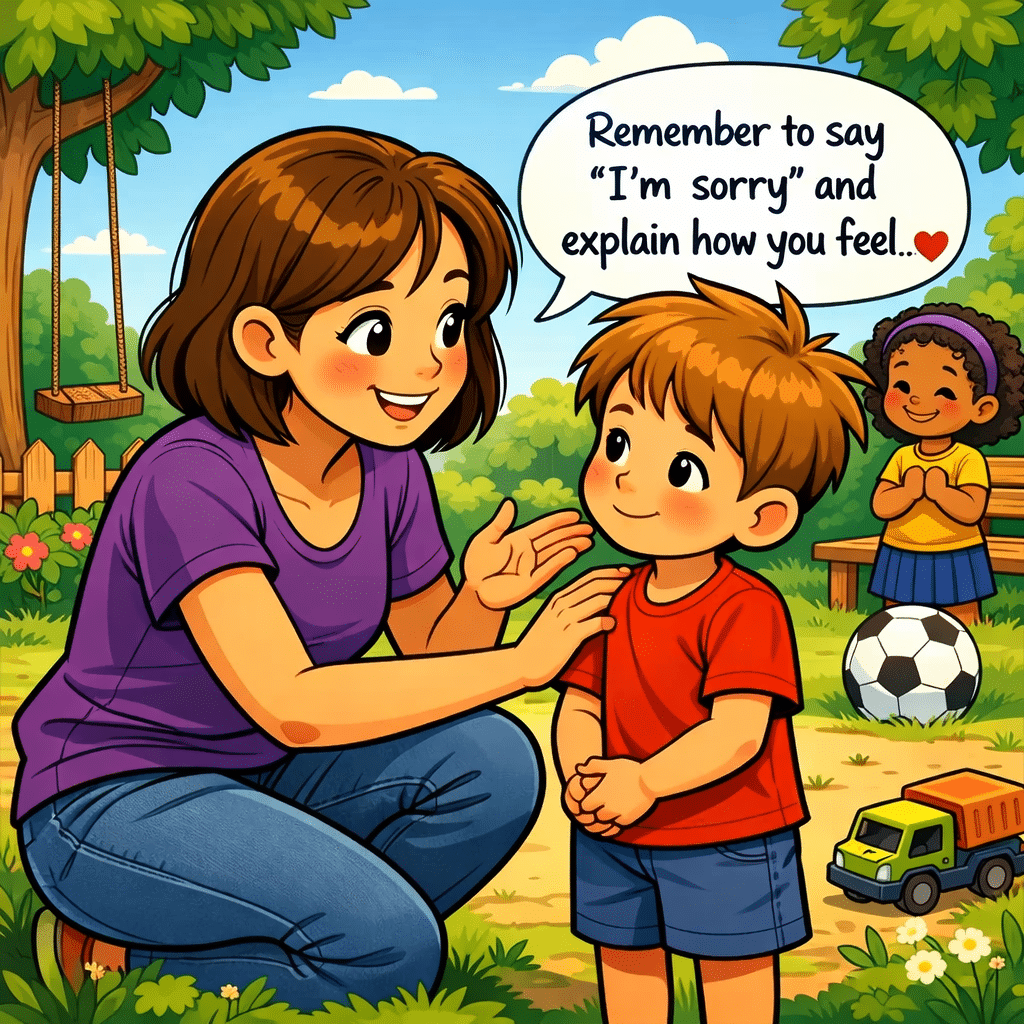
The problem with forced apologies
When children are pressured to apologise quickly, they may comply without processing what happened. Research on apologising shows that a meaningful apology requires the apologiser to take responsibility, admit the specific wrongdoing, ask for forgiveness, and commit to change. Simply repeating “sorry” without reflection doesn’t teach these skills. In fact, it can make kids feel resentful or embarrassed.
A better approach
- Pause and calm down. If emotions are high, give your child and the other person time to cool off. Apologies given in the heat of anger rarely feel sincere.
- Help them see the impact. Ask gentle questions: “What happened?” and “How do you think they felt?” This encourages your child to think about the other person’s feelings.
- Teach the four‑step apology. Use the framework from the previous article: be specific about what happened, explain why it was wrong, plan for better behaviour and ask for forgiveness. Guide your child through each step rather than dictating the words.
- Model apologies to yourself. When you make a mistake, apologise using the same process. Children learn empathy by seeing adults admit faults and make amends.
- Encourage repair. Beyond words, ask your child how they can make things better. They might rebuild a knocked‑over tower, draw a card or simply spend time with the person they hurt. Making amends shows genuine remorse.
Why it works
Supporting children to offer thoughtful apologies builds social‑emotional skills. They learn to recognise the impact of their actions, take responsibility, and make different choices in the future. Over time, genuine apologies become habits rather than forced performances.
Call to action
The Apology & Repair Toolkit provides step‑by‑step scripts and activities to help families practise authentic apologies. Instead of forcing a quick “sorry,” use the toolkit to coach your child through reflection, empathy, and repair.
