Table manners for kids can feel like a daily test of patience—especially when you’re hungry, the food is cooling off, and someone is narrating their entire life story with a mouth full of spaghetti. The good news? You don’t need perfect children or fancy dinners to build polite habits. You need repeatable habits, clear expectations, and calm coaching that doesn’t turn every meal into a courtroom drama.
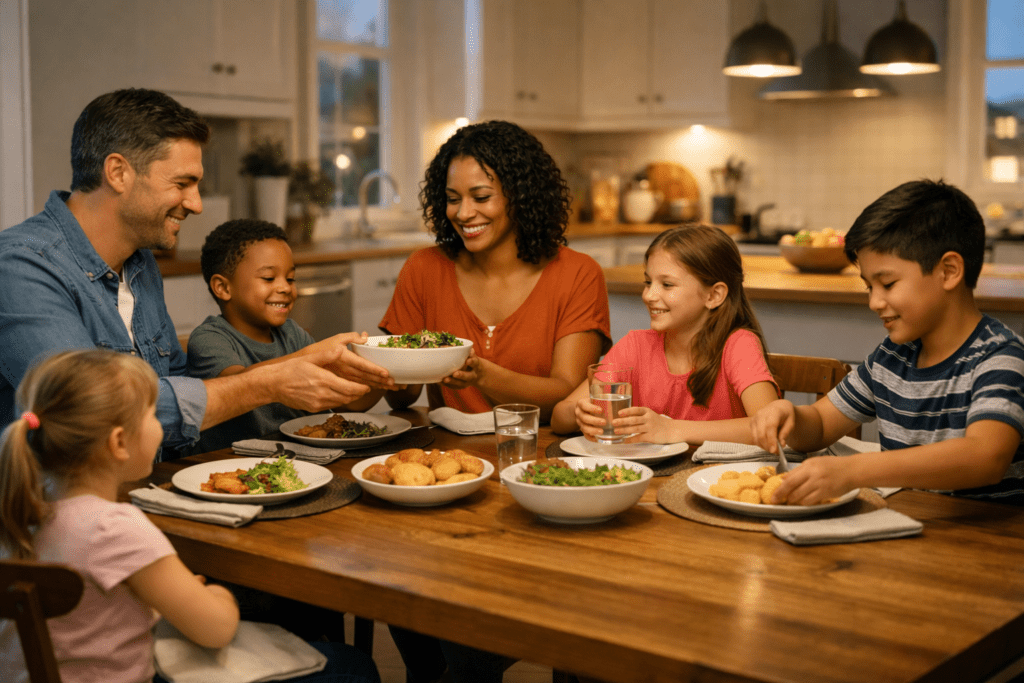
“Manners aren’t about showing off. They’re about showing respect.”
This guide will walk you through the core rules that cover most situations, what to expect by age, and practical scripts you can use tonight. No lectures. No shame. Just steady progress—one meal at a time.
Why Good Manners at the Table Matter in Real Life
Table manners for kids aren’t just about looking “nice” in public. They train skills that quietly shape a child’s future: patience, awareness, gratitude, and respectful communication. When kids learn how to behave at the table, they learn how to behave around people—and that transfers to school, sports teams, church events, restaurants, family gatherings, and even job interviews later on.
The confidence kids gain when they know what to do
A child who knows the basics—how to ask politely, how to wait their turn, how to excuse themselves—walks into social situations with less anxiety. They don’t have to guess the “rules of the room.” They’ve practiced them.
How family meals teach respect without long lectures
The table is a built-in classroom. It’s where kids watch you model patience, kindness, and self-control. And it’s where they practice the same—with immediate feedback.
Everyday benefits you’ll notice fast:
- Fewer interruptions and less chaos
- Calmer family conversations
- Less nagging (because expectations are clear)
- Kids who feel proud of themselves instead of constantly corrected
The Big 7 Habits That Make Table Manners for Kids Easier to Teach
If you’re overwhelmed, start here. These seven habits handle most mealtime struggles. They’re simple, teachable, and easy to reinforce without raising your voice.
Table Manners for Kids Start With a Simple “Before You Eat” Routine
Before the first bite, you set the tone. This is where many problems begin—kids already grabbing, bouncing, complaining, or talking loudly.
Try a 10-second routine:
- Sit first
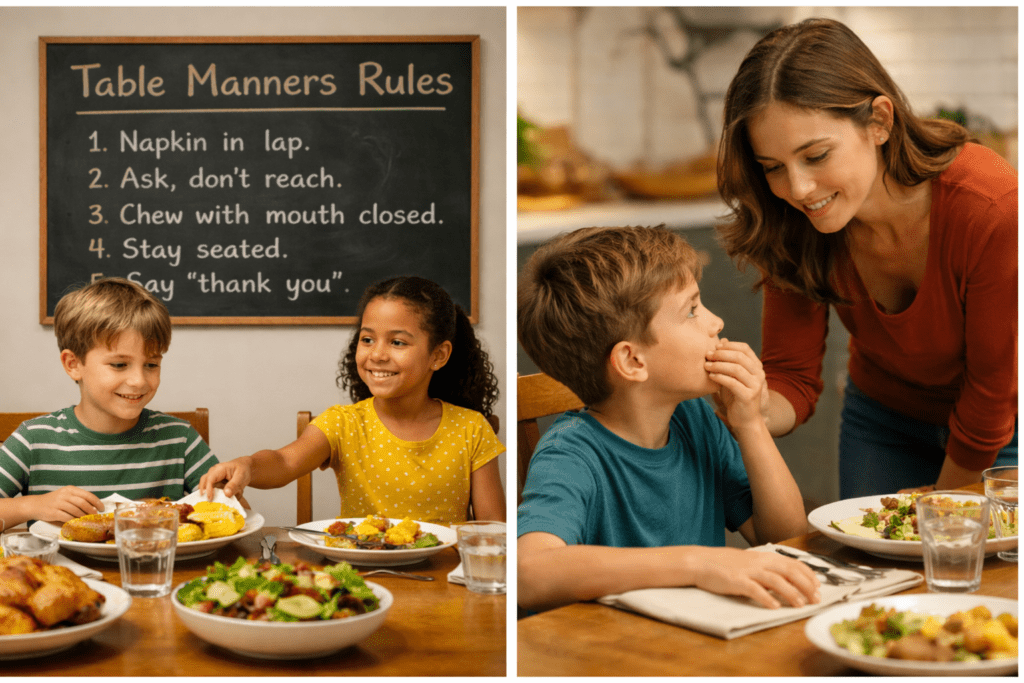
- Napkin in lap
- Hands to yourself
- Wait for the “go” (your family’s signal: prayer, a toast, or “Okay, dig in!”)
The Big 7 rules (and how to teach them in 2 minutes)
- Sit down before eating
- Use a napkin (lap first, then mouth)
- Chew with the mouth closed
- Use utensils the best you can (age-appropriate progress)
- Ask politely (“Please pass…”) instead of reaching
- Stay at the table (and learn how to excuse yourself)
- Show gratitude (thank the cook, thank the server, thank the host)
To make these stick, don’t teach all seven in one lecture. Teach one rule, practice it for a week, then layer in the next.
Quick Reference: The Big 7 at a Glance (Rules + Gentle Reminders)
| Habit | What it looks like | Calm reminder you can say |
|---|---|---|
| Sit first | Body stays in chair | “Let’s get settled first.” |
| Napkin | Napkin in lap before bites | “Napkin first, then food.” |
| Chew quietly | Lips closed, slow chew | “Close lips—try again.” |
| Utensils | Fork/spoon attempt each meal | “Fork first, fingers last.” |
| Ask politely | “Please pass…” | “Use your asking words.” |
| Stay seated | No wandering | “Sit to eat, then we move.” |
| Gratitude | “Thank you” + appreciation | “Let’s thank the cook.” |
Notice the tone: short, calm, and repeatable. That’s how you reduce power struggles.
Age-by-Age Expectations: Table Manners for Kids
One of the fastest ways to create frustration is expecting adult behavior from a child’s developing brain. Instead, aim for progress, not perfection. Your job is to raise the standard gradually—like moving a basketball hoop lower at first, then higher as skills improve.
Ages 3–5: starter skills that actually stick
At this age, the win is simple: short sitting time, basic “please/thank you,” and a napkin attempt.
- Sit for a short, realistic time (5–15 minutes)
- Practice one rule at a time
- Keep reminders cheerful and brief
- Praise effort more than outcome
Ages 6–9: consistency, polite asking, and utensil progress
This is a prime training window. Kids can understand rules and repeat routines.
- Ask instead of grabbing
- Chew with mouth closed (with reminders)
- Stay at the table until excused
- Use utensils regularly, even if imperfect
Ages 10–13: conversation skills and serving others
Now you can teach the “hosting mindset”—how to make others comfortable.
- Notice when others need food passed
- Participate in conversation without dominating
- Avoid rude comments about the meal
- Help set the table or clear it
Teens: tone, respect, and phone boundaries
Teens don’t need baby talk; they need clear standards and respectful accountability.
- Speak with a respectful tone
- Stay engaged (no eye-rolling, no sarcasm aimed at family)
- Follow the family phone rule
- Be willing to help without acting “above it”
The Calm Correction Method: Teach Without Lecturing or Embarrassing
Correction is where most families lose the room—because it becomes repetitive, emotional, and public, especially when working on table manners for kids. A better way is to correct like a coach: quick cue, small reset, then move on.
The “one reminder” rule that stops power struggles
Give one calm reminder. If they ignore it, don’t start the speech. Instead, do a small reset:
- Remove the plate for 10 seconds
- Ask them to “try again” with the correct behavior
- Return to normal immediately after they comply
This teaches: I can do it right, and the meal stays peaceful.
Praise that works (and what to avoid)
Praise should be specific, not dramatic.
- Good: “I noticed you asked politely—thank you.”
- Good: “You stayed seated the whole meal. That’s maturity.”
- Avoid: “Finally!” or “Why can’t you always do that?”
Go-to italicized phrases you can reuse:
- “Try that again with your best manners.”
- “Let’s reset—show me the respectful way.”
- “I love your effort. Keep going.”
Practice Scripts for Table Manners for Kids That Sound Natural
Kids do best when you give them exact words to say—especially in moments where emotions rise (hunger, frustration, sibling conflict). Practice these table manners for kids in short roleplays.
Passing food, asking for seconds, and gratitude
- “Please pass the bread.”
- “May I have some more, please?”
- “Thank you for making dinner.”
- “This tastes good—thank you.”
Joining a conversation without interrupting
- “Excuse me—can I add something?”
- “When you’re done, I have a question.”
- “I agree, and here’s why…”
Declining food respectfully (without drama)
Teach kids to be honest without being insulting.
- “No thank you, I’m okay right now.”
- “May I have a small portion?”
- “I’m still learning to like that, but thank you.”
Kid-friendly phrases to post or practice:
- “Please pass…”
- “Excuse me…”
- “No thank you…”
- “May I be excused?”
- “Thank you for…”
No-Stress Solutions for Common Table Manners for Kids Issues
Most “bad manners” at the table are really unmet needs in kids: hunger, fatigue, too much stimulation, or unclear expectations, especially when you’re working on table manners for kids. These fixes keep standards high without turning you into the table police.
Getting up repeatedly / wiggling
Fix: Give a clear rule and a clear “exit plan.”
- “We stay seated until we’re excused.”
- If they must move, offer a short role: “Bring napkins,” “Refill water,” then return.
Talking with food in the mouth
Fix: Use a neutral cue and a reset.
- “Close lips—try again.”
- Pause the conversation until chewing is finished.
Complaining about meals
Fix: Teach the “respectful honesty” rule.
- Replace “This is nasty” with “No thank you” or “May I have a small portion?”
- Set a standard: no insulting the cook, ever.
Screens at the table
Fix: Make the rule simple and consistent.
- “Phones away during meals—unless it’s an emergency.”
- Offer a replacement habit: a conversation question, a gratitude round, or “high/low of the day.”
Quick Table: Problem → Calm Fix → Why It Works
| Problem | Calm fix | Why it works |
|---|---|---|
| Won’t stay seated | Clear rule + short helper job | Keeps control without a fight |
| Mouth full while talking | Neutral cue + pause | Teaches self-control fast |
| Complains about food | “No thank you” script | Protects respect and honesty |
| Screen addiction at meals | Consistent phone boundary | Restores connection and conversation |
A Simple 7-Day Challenge to Build Consistency
You don’t need a full manners “boot camp.” You need a short, structured week. Focus on one habit per day, then repeat the cycle next week.
Day-by-day plan (keep it light)
- Day 1: Napkin first
- Day 2: Ask politely (“please pass…”)
- Day 3: Chew with mouth closed
- Day 4: Stay seated until excused
- Day 5: Gratitude (“thank you for…”)
- Day 6: Conversation courtesy (no interrupting)
- Day 7: Combine two habits and celebrate progress
Simple reward ideas that aren’t candy:
- Choose the dinner theme (taco night, breakfast-for-dinner)
- Pick the family game after dinner
- Earn “host helper” status (setting the table, pouring drinks)
- A privilege: music at dinner, choosing dessert, extra bedtime story
Table Manners for Kids in Public Settings: Restaurants, Holidays, and Visits
Home practice is great—but public moments are where stress spikes. The secret is pre-teaching and giving kids a role.
Pre-teach the expectations before you arrive
In the car, say it plainly:
- “We use indoor voices.”
- “We say please and thank you.”
- “We stay seated.”
- “If you need something, you whisper to me.”
Give kids a “helper job.”
Jobs focus energy:
- Hold the door
- Pass out napkins
- Help serve plates
- Thank the host or server
Reset after a slip-up—without a scene
If a child messes up in public:
- Get close
- Whisper the cue
- Ask for a quick redo
- Move on fast after the correction
This teaches dignity. And it keeps the moment from turning into a family headline.
FAQs Parents Ask Most
How long should kids sit at the table?
Start with what’s realistic. For younger kids, 10–15 minutes may be a win. Build stamina over time.
Should I force “please” every single time?
Aim for consistency, not perfection. If you correct every tiny miss, you’ll drain the joy. Focus on one or two “must-have” manners and expand.
What if my child struggles with utensils?
Use “progress rules.” Fork first, help if needed, and celebrate effort. Skills grow with repetition.
What about picky eating and manners?
Manners and appetite are different. Keep the respect rule: no insults, no drama. Allow “no thank you” and small portions.
Conclusion: One Meal, One Habit, One Win
Building strong table manners for kids isn’t about raising tiny adults—it’s about raising respectful humans who know how to live well with others. Start small. Choose one habit for tonight. Practice it calmly. Praise progress. Then repeat.
“What you practice in peace becomes who they are under pressure.”

One Response