Introduction
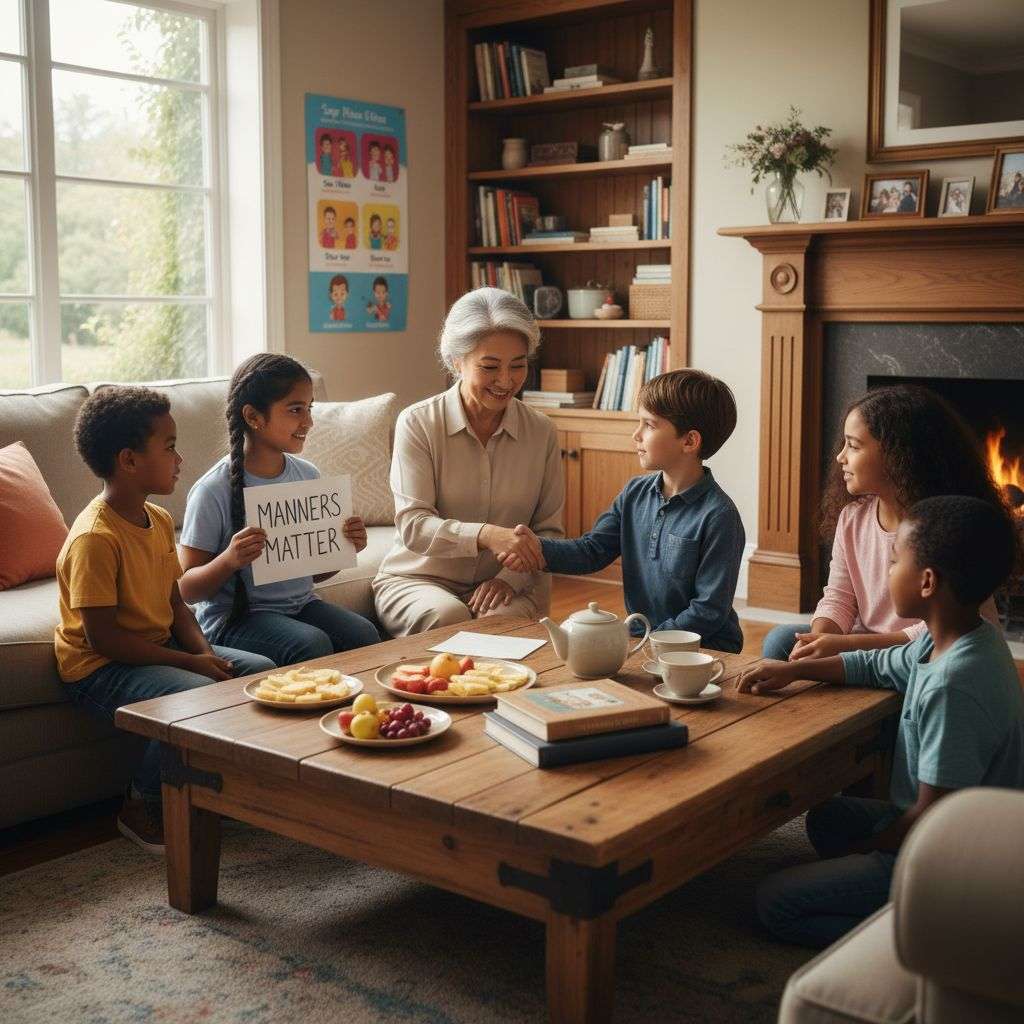
Teaching manners for kids doesn’t have to mean lectures, yelling, or constant correction. With a calm, focused approach that emphasizes small practice over time, caregivers can help children ages 6–14 build respectful habits that last. This article shares a simple weekly plan and practical strategies for parents and grandparents who want consistent progress without stress.
From daily modeling to gentle practice routines, you’ll discover proven ways to help kids become confident, respectful, and socially aware—all without power struggles.
Quick Answer
To teach manners to kids (ages 6–14) without lecturing or yelling, set up a weekly routine with small, repeated practices, modeling calm behavior, using age‑appropriate expectations, celebrating wins, and gently correcting with curiosity and choice. Focus on consistency over perfection.
Why This Matters
Many caregivers rely on correction and reminders, but constant criticism can lead to resistance, power struggles, or emotional shutdown. Kids learn most effectively when they:
- Feel respected and safe
- See adults model what they’re learning
- Get small, consistent opportunities to practice
Rather than repeating rules, this approach builds skills and confidence—so manners become natural, not forced.
The Key Principles of Teaching Gentle Manners for Kids
1. Respectful Modeling
Kids learn what they see more than what they’re told. When caregivers consistently show polite behavior—saying please, thank you, and excuse me—children internalize those behaviors.
2. Small, Repeated Practice
Rather than setting long lists of rules, choose a straightforward behavior each week (like greeting people politely) and practice it together in real moments.
3. Positive Reinforcement
Celebrate effort—not just perfection. Acknowledging progress builds motivation and keeps kids engaged.
4. Choices Over Commands
Giving choices helps kids feel empowered. Instead of “Be polite,” try: “Would you like to say hello with a wave or a smile?”
5. Calm Correction
When manners lapse, respond with gentle curiosity: “What could we do differently next time?” This helps kids learn without shame.
A Step‑by‑Step Guide to Weekly Manners for Kids
Here’s a simple weekly plan you can follow:
Week 1: Greetings & Eye Contact
- Day 1 (Model & Notice)
Demonstrate a warm greeting. Notice and comment when your child tries it: “I liked how you said hi to Grandma!” - Day 2 (Practice Together)
Play greeting scenarios: door, phone, classroom, bus stop. - Day 3 (Real‑Life Practice)
Encourage greetings with neighbors or friends. Celebrate attempts. - Day 4 (Reflection)
Ask: “What felt easiest about greeting people today?” - Day 5 (Reinforcement)
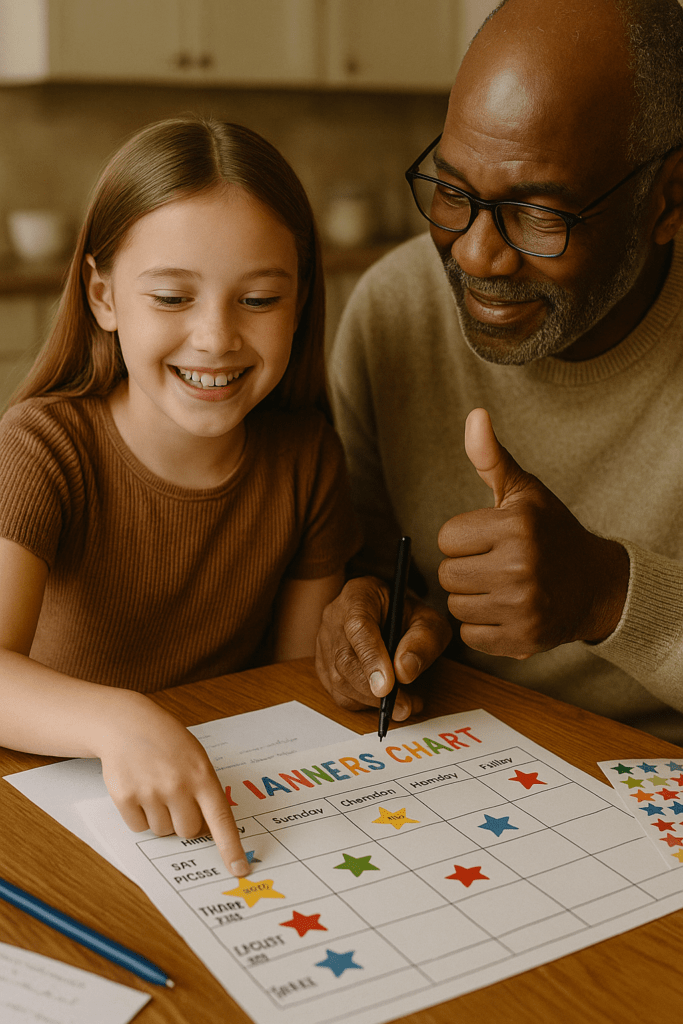
Make a simple sticker or star chart for lovely greetings.
Week 2: Saying Thank You
- Day 1: Role‑play saying thank you with different voices/moods.
- Day 2: Notice opportunities (gift, help, snack) to say thank you.
- Day 3: Practice writing a simple thank‑you note.
- Day 4: Talk about why thank you matters.
- Day 5: Highlight effort and growth.
Week 3: Listening Skills
- Day 1: Play listening games (Simon Says).
- Day 2: Model active listening (look, nod, repeat).
- Day 3: Practice patience during conversations.
- Day 4: Reflect: How did it feel to really listen?
- Day 5: Reward progress with praise or a small privilege.
Week 4: Helping & Cooperation
- Day 1: Choose a small chore to do together.
- Day 2: Let kids lead the help with gentle support.
- Day 3: Talk about how helping makes others feel.
- Day 4: Notice teamwork moments.
- Day 5: Celebrate contributions.
Tip: Adjust pace for ages 6–14. Older kids may lead reflections or teach younger ones.
Everyday Scenarios & Gentle Phrases
Here are examples of how to gently guide manners in everyday situations:
| Situation | Instead of Yelling | Try This Phrase |
|---|---|---|
| Child interrupts | “Stop talking!” | “I’m listening. Can you wait until I finish?” |
| No thank‑you given | “Say thank you now!” | “What’s something kind you noticed?” |
| Complaints about task | “Do it already!” | “Would you rather do it now or after a break?” |
This puts calm communication first, helping kids learn self‑regulation and respect.
Common Mistakes Caregivers Make
❌ Focusing Only on Rules
Kids need practice, not just repetition of rules.
❌ Lecturing After Mistakes
Long talks after an error often feel punishing and reduce motivation.
❌ Expecting Instant Behavior Change
Habits take time; consistency beats intensity.
❌ Using Shame or Bribes
Rewards can help in the short term, but internal motivation grows from connection and respect.
A Gentle Manners for Kids Checklist
Use this printable‑style checklist weekly:
✔ Week’s Manners Focus ____________________
✔ Modeled behavior today
✔ Daily practice opportunity noticed
✔ Positive feedback given
✔ Reflection question asked
✔ Progress acknowledged
Keep it simple. Small wins lead to big growth.
Why This Works: The Psychology Explained
Kids develop social skills through repetition, connection, and emotional safety:
- Repetition builds habit.
- Positive feedback strengthens neural pathways.
- Connection makes learning feel safe, not threatening.
When caregivers model calm, predictable responses, children mirror that behavior, leading to lasting social confidence.
When Challenges Arise
Even with gentle practice, kids will push boundaries. Here’s how to handle common pushbacks:
“I don’t feel like practicing!”
Offer two practice options instead of one demand.
“That’s stupid!”
Acknowledge feelings: “I hear that feels boring to you.” Then tie expectations to family values.
For Older Teens (12–14)
Focus more on respectful communication skills than formal manners rules. Have them help create the practice plan.
How to Keep Progress Going Long‑Term
- Rotate Manners Themes every 3–4 weeks.
- Let Kids Take Ownership by setting weekly goals.
- Celebrate Growth at the end of each month.
- Use Family Meetings to reflect and adjust.
Building manners is a journey, not a one‑time task.
Helpful Resources
- Get free printable routines and charts at [Internal link: https://mannersmatternow.com/parents/]
- Explore practical tools and activity guides at [Internal link: https://mannersmatternow.com/resources/]
These resources can support your calm weekly practice without overwhelm.
Key Takeaways
- Small, weekly focus areas beat long lists of rules.
- Modeling beats yelling.
- Practice builds habits.
- Positive reinforcement encourages growth.
- Reflection deepens understanding.
FAQ
Q: At what age can I start these routines?
A: Around age 6, children can understand simple social expectations and benefit most from gentle, structured practice.
Q: How long should each practice take?
A: 5–10 minutes a day is enough. It’s the consistency that matters.
Q: What if my child resists every practice?
A: Start with curiosity: “What makes this hard?” Then offer limited choices to build autonomy.
Q: Can this method work for teens?
A: Yes — with focus on collaboration, mutual respect, and leadership in practice planning.
Q: Do I need to be perfect?
A: No. Kids notice efforts more than perfection. Your calm consistency matters most.
Conclusion
Teaching kids ages 6–14 manners without lecturing or yelling is entirely achievable with a calm, repeatable weekly routine built on small practices. By modeling behavior, focusing on one skill at a time, and celebrating progress, caregivers foster respectful, confident children without stress or conflict.
Ready to build your own weekly manners routine? Start with one small focus this week—and watch how consistency transforms behavior.
👉 Get even more tools and printables when you sign up to Get Free Resources and support your calm manners journey.
