Why This Matters
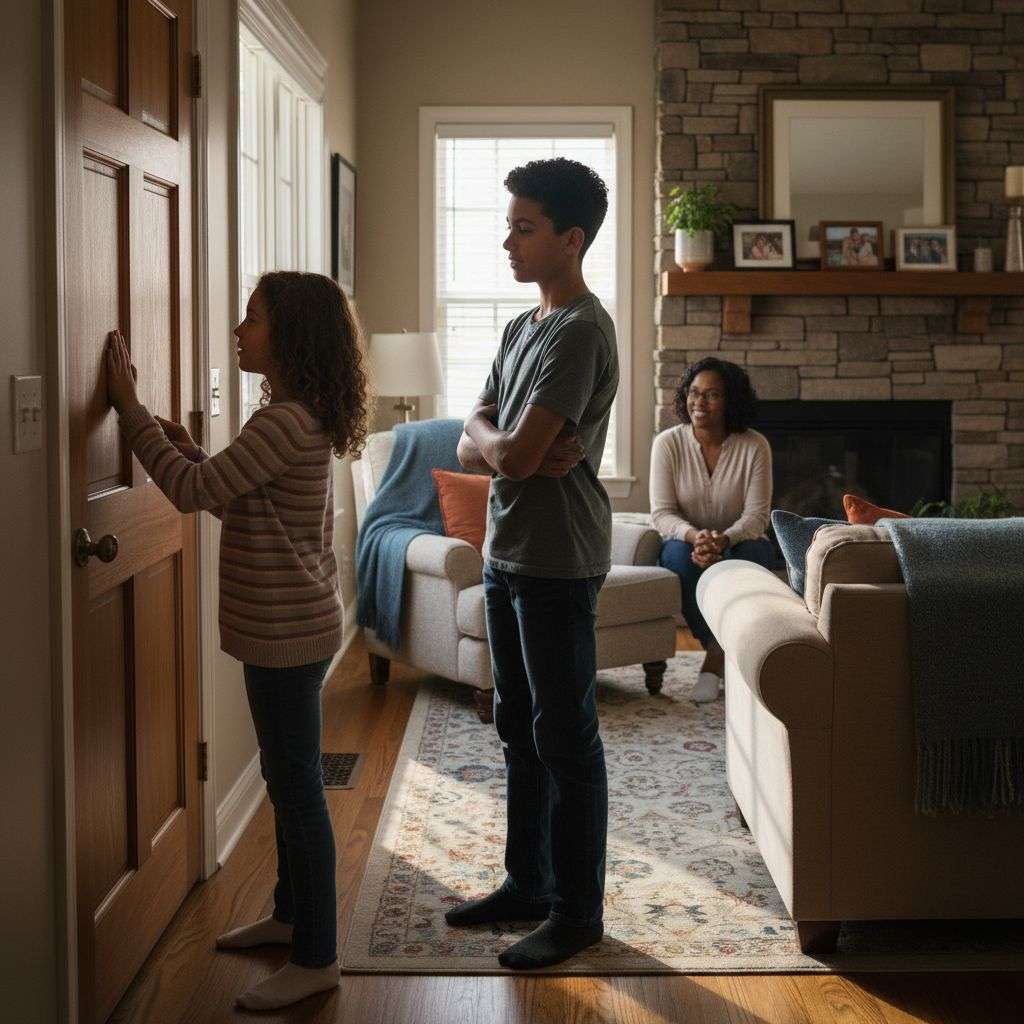
“Stop barging into my room!” “He read my journal again!” If you’re a parent of more than one child, you’ve probably heard these protests more than once. Teaching sibling privacy rules is not just about avoiding fights—it’s about modeling respect, autonomy, and boundaries at home.
Quick Answer: The best way to establish sibling privacy rules is to set clear boundaries, involve your kids in the conversation, model respectful behavior, and enforce age-appropriate consequences for violations.
Key Principles
Respect Is Non-Negotiable
At the core of sibling privacy is mutual respect. When children understand that privacy is a right, not a privilege, they’re more likely to respect each other’s space.
Age-Appropriate Expectations
A 7-year-old and a 15-year-old have vastly different privacy needs. Ensure your rules evolve with your children’s development stages.
Family as a Team
Framing the household as a team can encourage siblings to see privacy as a shared value. Rules should be written with your kids—not just enforced on them.
Consistency Creates Trust
Inconsistent enforcement of rules undermines their value. Be fair and predictable in meting out consequences when privacy is violated.
Step-by-Step How-To
1. Hold a Family Meeting
Create a calm space where everyone feels heard. Ask each child to define what privacy means to them. This creates ownership and reveals unique concerns.
2. Define What Needs Protecting
Help kids identify what areas or items deserve privacy, like:
- Bedrooms
- Diaries or journals
- Phone or tablet usage
- Conversations with friends
- Shower and bathroom time
3. Co-Create the Sibling Privacy Rules
Write a simple list of 5–7 privacy rules with your children. For example:
- Knock before entering a room
- Ask before borrowing
- Respect closed doors
- No reading others’ texts or journals
- Keep private conversations private
4. Set Consequences for Violations of Sibling Privacy Rules
Examples:
- Temporary loss of shared privileges (e.g., screen time)
- Apology letters
- Role-reversal role plays to show empathy
5. Model Privacy-Respecting Behavior
Children learn from you. Don’t barge into their space or mock their need for privacy. Respect their texts, journals, or door signs just as you’d want them to respect yours.
6. Reinforce Through Praise
Catch them doing it right! Praise moments when one sibling shows restraint or asks for permission.
7. Revisit Quarterly
Children grow. So do their boundaries. Set a reminder every 3–4 months to revisit the rules and adjust them if needed.

Common Mistakes to Avoid
- Assuming privacy equals secrecy. Wanting privacy doesn’t mean hiding bad behavior.
- Not adjusting rules as kids grow. A teenager’s space needs are more complex than a 7-year-old’s.
- Punishing without discussion. Disciplinary actions should be paired with conversations about why the rule matters.
- Forgetting tech boundaries. Digital privacy needs to be part of the conversation.
Quick Reference Table
| Rule Type | Example Rule | Age Group |
|---|---|---|
| Physical Space | Knock before entering a bedroom | 7+ |
| Personal Belongings | Don’t eavesdrop on calls or conversations | 7+ |
| Digital Respect | Don’t read others’ texts or journals | 10+ |
| Emotional Privacy | Don’t eavesdrop on calls or convos | 10+ |
| Bathroom/Changing | Always knock and wait for permission | All ages |
Key Takeaways
- Privacy is a form of respect, not secrecy.
- Involve kids in the rule-making process to build ownership.
- Rules must evolve with age and maturity.
- Enforcement matters—make consequences clear and consistent.
- Model what you expect—kids mirror your actions.
- Praise positive behavior to reinforce norms.
FAQ
Q: What if my kids don’t respect each other’s privacy?
A: Revisit the rules together, talk about why privacy matters, and follow through with consistent, fair consequences.
Q: How can I explain privacy to a younger child?
A: Use age-appropriate analogies like “Would you like it if someone walked into your room without asking?” to spark empathy.
Q: Should I monitor their digital privacy?
A: For younger kids, yes—with transparency. As they grow older, they gradually offer more autonomy.
Q: My teen wants a lock on their door. Is that okay?
A: Possibly. Consider it based on maturity, past behavior, and whether they follow household rules.
Q: What if one sibling tattles to violate another’s privacy?
A: Distinguish between safety concerns and nosiness. Teach them when it’s appropriate to share and when to stay out.
Conclusion
Sibling privacy rules aren’t just about avoiding fights—they’re about teaching lifelong values of respect and empathy. By setting clear expectations, involving your children in decision-making, and reinforcing respectful behavior, you create a home environment that is not only peaceful but empowering for everyone involved.
💡 Looking for more on respecting personal boundaries? Check out our full guide here.
