Trust + Quick Proof

Created by Vernon, author of Teaching Kids Good Manners: The Old School Way and founder of MannersMatterNow.com. This toolkit teaches kids how to go beyond hollow apologies and actually repair the situation using the 3-Part Repair method.
"My son used to just mumble 'sorry' and run off. Now he stops, names what he did, and asks how he can fix it. The change was almost immediate."
"The practice scenarios are gold. My students actually role-play real conflicts and walk away knowing what to do next time."
"We use the 3-Part Repair poster in our Sunday school room. The kids reference it on their own now when conflicts happen."
What's Inside
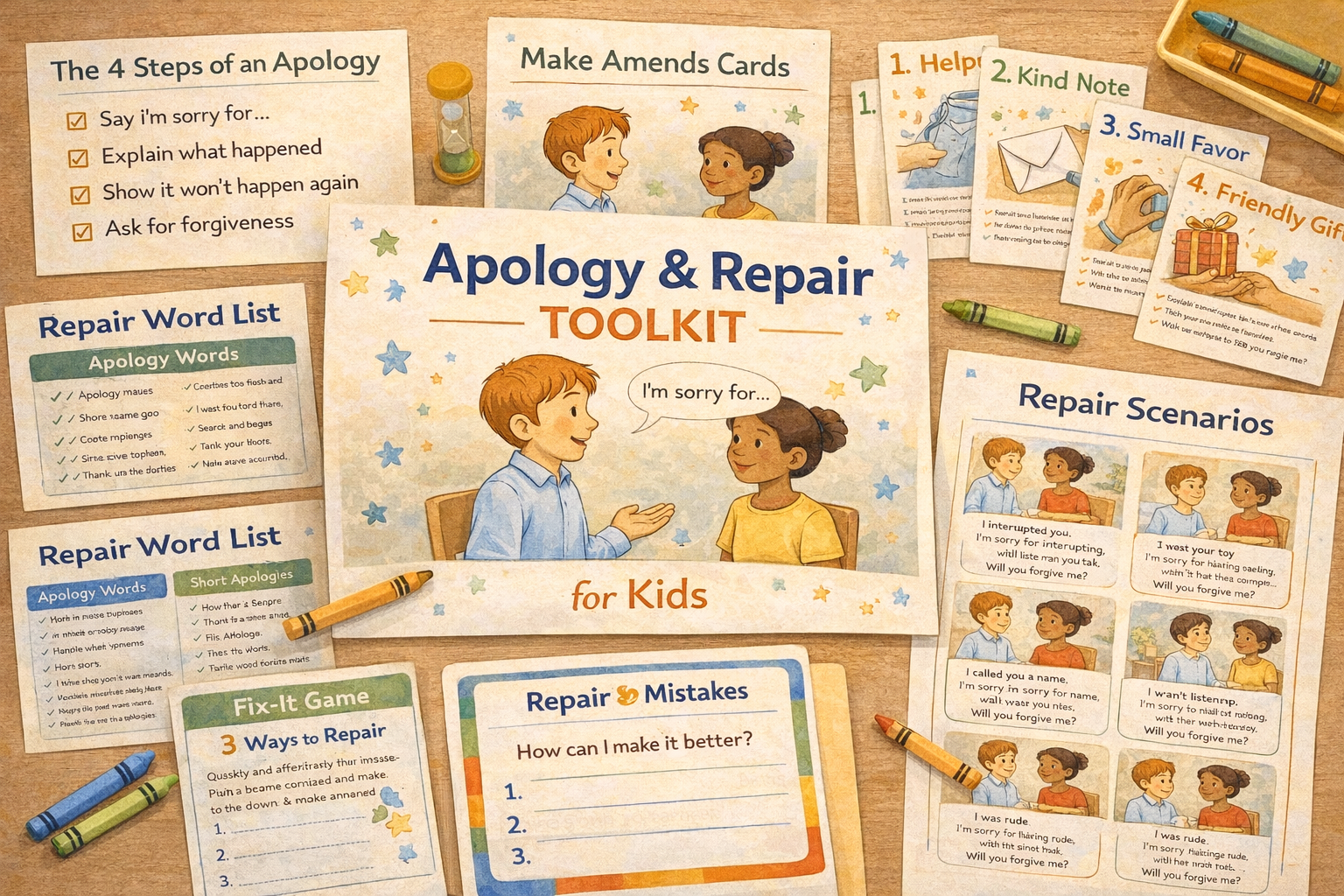
This toolkit includes everything you need to teach real apology and repair to kids ages 6 to 12. Instead of stopping at “Say you're sorry,” this set shows children how to admit what they did, apologize sincerely, and take practical action to make things better.
A complete 10-minute guided lesson that walks you through how to introduce the 3-Part Repair using real-life examples, simple coaching language, and call-and-repeat practice.
Three detailed scenarios plus bonus prompts where kids practice what to say after spilling, breaking, interrupting, lying, or hurting someone's feelings.
A printable reflection sheet where kids identify a mistake, name who was affected, choose a repair step, and write or say their full apology.
A colorful reminder poster with the three steps: Say What You Did, Say You're Sorry, Offer to Repair. Perfect for classrooms, bedrooms, counseling corners, or church walls.
A practical set of “make it right” prompts such as clean it up, replace it, help fix it, write a note, or do a kind action that fits the situation.
Guidance for parents, teachers, and leaders on keeping the tone calm, avoiding forced empty apologies, praising honest ownership, and building the repair habit over time.
How to Use It (7-Day Plan)

Pick one apology skill and practice it for 5 to 10 minutes a day. By the end of the week, your child will understand that a real apology is not just words — it is words plus ownership plus repair.
Teach your child to say exactly what happened: “I knocked over your tower,” “I yelled at you,” or “I took it without asking.” Keep it specific and honest.
Practice calm, direct apologies without excuses. Use short models like “I'm sorry for grabbing that from you” instead of “Sorry, but you made me mad.”
Teach the powerful follow-up question: “How can I make it better?” or “What can I do to help fix this?” This shifts the focus from escaping trouble to making things right.
Use the Repair Ideas Cards to match the repair to the problem. Clean up a mess, replace something broken, write a note, or offer a helpful action.
Role-play one or two common family or classroom situations. Let your child say the full 3-Part Repair out loud until it feels natural.
Use the worksheet to talk about one recent mistake. Ask what part was hardest: saying what happened, saying sorry, or offering repair.
Watch for one real moment during the day when your child needs to apologize. Coach gently, then step back and let them try the full repair process themselves.
Common Struggles
Does this sound familiar? This toolkit was built for exactly these moments:
"My child says 'sorry' just to get out of trouble."
The 3-Part Repair poster and teaching script show kids that an apology has structure. They learn that “sorry” is only the middle step, not the whole job.
"They keep saying sorry, but they do the same thing again tomorrow."
The Repair Plan worksheet slows the moment down and helps kids connect the mistake, the person affected, and the action needed to repair it. That reflection makes the lesson stick.
"I never know what to tell them to do after they apologize."
The Repair Ideas Cards give you ready-made next steps. Instead of guessing, you can guide your child toward a practical repair that matches the situation.
"My students argue, blame each other, and won't take ownership."
The scenario cards let children rehearse apologies before emotions are high. That practice helps them learn calm wording, personal responsibility, and better follow-through.
"I don't want to force fake apologies, but I still want accountability."
The adult coaching tips show how to avoid shaming, avoid power struggles, and still require a child to make things right. The goal is sincere ownership, not performance.
Frequently Asked Questions
What ages is this toolkit for?
The Fix It, Don't Just Say Sorry Toolkit for Kids is best for ages 6 to 12. Younger children can use the visuals and short scripts, while older children can handle fuller repair conversations and written reflection.
Can teachers use this in the classroom?
Yes. Teachers can use the scenario cards for morning meeting, SEL time, partner role-play, conflict repair practice, or behavior reset conversations after recess or group work.
How long does it take each day?
Most daily practice takes 5 to 10 minutes. You can use one scenario, one script, or one worksheet section at a time and still build steady growth.
Do I need the book to use this toolkit?
No. This toolkit stands on its own. It works as a quick family or classroom resource, and it also pairs well with the broader manners lessons in the book.
What if my child gets embarrassed easily?
Start with role-play, puppets, or written examples before using a real-life moment. Keep the tone calm and matter-of-fact so the child feels coached, not shamed.
Can I use this for homeschool, church, or counseling support?
Yes. The Fix It, Don't Just Say Sorry Toolkit for Kids works well in homeschool routines, Sunday school, youth groups, counseling support, and one-on-one family teaching moments.
Related Blog Posts
Ready to Teach Your Child to Fix It, Not Just Say Sorry?
Download the Fix It, Don't Just Say Sorry Toolkit now and start with the 3-Part Repair lesson today. It is simple, practical, and gives your child a better way to apologize with honesty, empathy, and real follow-through.
Download the ToolkitMannersMatterNow.com — Because manners still matter.