Church Behavior Toolkit for Kids
Good church behavior is a skill kids can practice all week, not just learn on Sunday morning. Does your child fidget through the sermon, whisper at the wrong moments, or need constant nudging to sit still in the pew? You’re not alone — and it doesn’t have to be that way.
The Church Behavior Toolkit gives parents and grandparents practical, faith-based tools to teach children how to enter worship with reverence, sit respectfully through the service, and leave with their heads held high. Role-play cards, behavior scripts, and a 7-day practice plan — all grounded in old-school values that still matter.
No more embarrassing moments. No more battles before Sunday service. Just a child who understands that church is a sacred space — and acts like it.
Trust + Quick Proof

Vernon J. DeFlanders Sr. is the author of Teaching Kids Good Manners: The Old School Way and the founder of MannersMatterNow.com, a character and manners education platform serving families, schools, and youth organizations.
What’s Inside
Six practical, printable tools designed to build the habits of reverence, attentiveness, and respectful worship — one day at a time. Every item is designed to be used at home before Sunday arrives, so your child walks into worship already prepared.
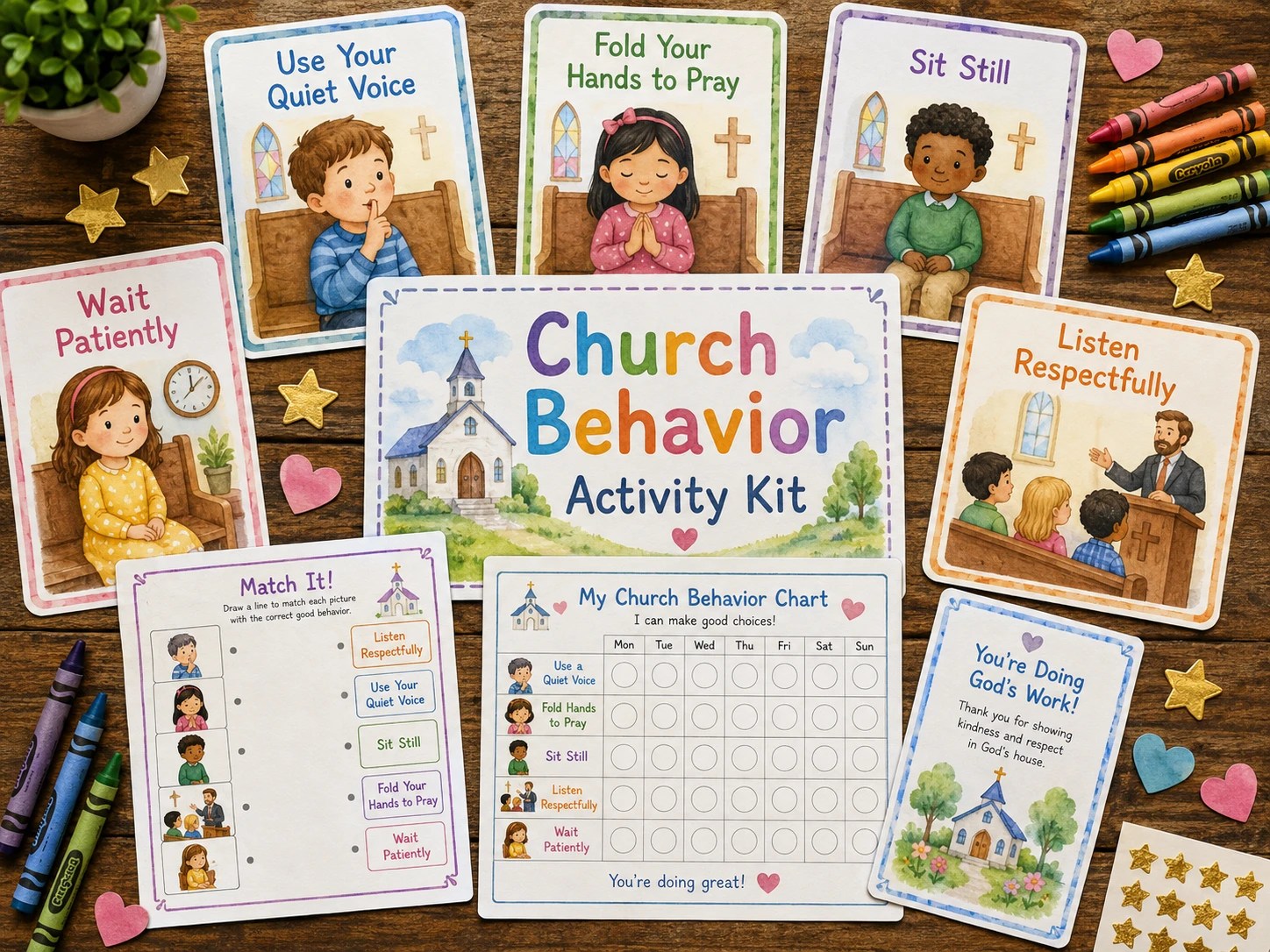
Reverence Practice Cards
8 laminated-ready cards showing children exactly what reverent behavior looks, sounds, and feels like in a worship setting. Children practice at home before Sunday arrives.
The Quiet Hands, Still Feet Chart
A visual guide for ages 4–7 teaching the physical elements of respectful worship: sitting still, folded hands, quiet voice, eyes forward. Posts on the refrigerator for weekly review.
Listening for God’s Message Guide
A fill-in activity children complete during the sermon to practice active, respectful listening. Age-appropriate prompts help kids engage rather than zone out.
Before We Go Checklist
A Sunday-morning routine card that prepares children mentally and spiritually before worship begins. Covers attitude, appearance, and the “why” behind church behavior.
Role-Play Scenario Cards (8 Cards)
Eight realistic church scenarios: the wiggly toddler, the whispering child, the dropped hymnal, the long sermon. Children practice the respectful response before it happens in real life.
7-Day Reverence Builder
A daily home practice tracker that builds the habits of reverence, quietness, and attentiveness between Sundays. Sticker-based progress chart keeps children engaged.
How to Use It (7-Day Plan)

This toolkit is designed to be used over one week before a regular Sunday service. Each day builds on the last, so by Sunday your child has already practiced every skill they need — at home, without pressure.
Day 1 — What Is Reverence
Read the Reverence Practice Cards together. Define reverence in your child’s words. Practice what it looks like — quiet, still, attentive.
Day 2 — The Quiet Body
Use the Quiet Hands, Still Feet Chart. Practice sitting reverently for 5 minutes with soft worship music. Praise what they do right, not what they do wrong.
Day 3 — Listening Practice
Use the Listening for God’s Message Guide. Have your child listen to a short Bible story and complete the prompts. Build the listening muscle before Sunday.
Day 4 — Before We Go
Walk through the Before We Go Checklist together. Talk about why church behavior matters — not just rules, but respect for God and the congregation.
Day 5 — Role-Play Day
Pull out the Scenario Cards. Act out 3–4 situations: a dropped book, a restless moment, a whisper from a sibling. Practice the right response until it feels natural.
Day 6 — Family Review
Discuss what went well this week and one thing to work on. Let your child lead the conversation. Add their Day 6 sticker.
Day 7 — Sunday Ready
Attend worship. Debrief afterward with one specific compliment. Let your child place their final sticker and celebrate finishing the week.
Common Struggles
Does this sound familiar? This toolkit was built for exactly these moments:
The Quiet Hands, Still Feet Chart gives children a concrete physical target. Sitting still is a skill — it improves with daily 5-minute practice, not lectures about behavior on Sunday morning.
The Role-Play Scenario Cards address sibling dynamics directly. Children who have practiced the right response at home are far less likely to default to disruption when it matters.
The Listening for God’s Message Guide gives them a job during worship. Children who have something to do with their minds are children who aren’t looking for something to do with their hands.
The Before We Go Checklist reframes Sunday morning from a battle into a routine. When the checklist is the authority — not the parent — the resistance drops significantly.
Reverence is a character quality, not just a church behavior. The 7-Day Reverence Builder builds it at home so it shows up everywhere — including at the dinner table, in school, and in conversation with adults.
Keep the Learning Going
Built on the Book Parents Already Trust
Every technique in this toolkit comes from the framework in Teaching Kids Good Manners the Old-School Way — rated 4.8 stars with over 140 reviews on Amazon. The book gives you the complete parenting philosophy. This toolkit gives your child the daily practice. Together, they build habits that last.
Built on the book. Scan to find it on Amazon.

amazon.com/dp/B0GG6KGQK7
Church Behavior — Frequently Asked Questions
What ages is this toolkit designed for?
Ages 4 through 12. The Quiet Hands, Still Feet Chart is designed for younger children ages 4–7; the Listening Guide and Scenario Cards are engaging for children up to 12.
How long does it take to work through the toolkit?
The 7-Day Plan is designed to run the week before a regular Sunday service, in short daily sessions of 5–10 minutes. The 7-Day Reverence Builder tracker keeps reinforcing the habits for as many additional weeks as you like.
Is this toolkit faith-specific or denomination-specific?
The toolkit is broadly Christian in its values — reverence, worship, and respect for God — but is not tied to any specific denomination. It works equally well for Baptist, Catholic, Methodist, non-denominational, and other Christian worship traditions.
What do I receive after purchase?
A printable PDF with all six tools. Print at home or at any copy shop. One license covers your household.
Do I need the book to use this toolkit?
No. The toolkit is a complete, standalone resource. It’s built on the framework from Teaching Kids Good Manners the Old-School Way, so families who own the book get extra context, but everything you need to start practicing reverent church behavior is included in the printable PDF.
My child already behaves reasonably well in church. Is this still useful?
Yes. The toolkit builds understanding, not just compliance. Children who understand WHY reverence matters carry that posture into every situation — school, family gatherings, interactions with elders.
Can I use this in a Sunday school class or children’s ministry?
Absolutely. The Role-Play Scenario Cards work especially well in group settings. One license covers one classroom or children’s ministry group.
What if my child pushes back on the practice activities?
Start with Day 2 (the physical practice) — it feels like a game, not a lesson. Most children respond immediately when sitting still is framed as a skill they’re building, not a rule they’re following.
Related Toolkits & Resources
Ready to Teach Church Behavior the Old-School Way?
Six printable tools. Seven days of guided practice. One Sunday morning that looks completely different. Give your child the skills — and the understanding — to walk into worship with dignity and walk out with a story to tell.
Get the Toolkit – $7.99