Responsibility Chart for Kids by Age
Simple, age-appropriate responsibilities that build respect, confidence, and follow-through — from toddler to teen.
- Avoid power struggles by matching chores to your child’s age
- Build respect, responsibility, and follow-through with simple daily tasks
- Start this week with a free, printable chart
📋 Get the Free Responsibility Chart
A simple age-by-age guide for building self-care, home responsibility, school habits, manners, and character—plus access to the interactive app.
Download the Free Printable →
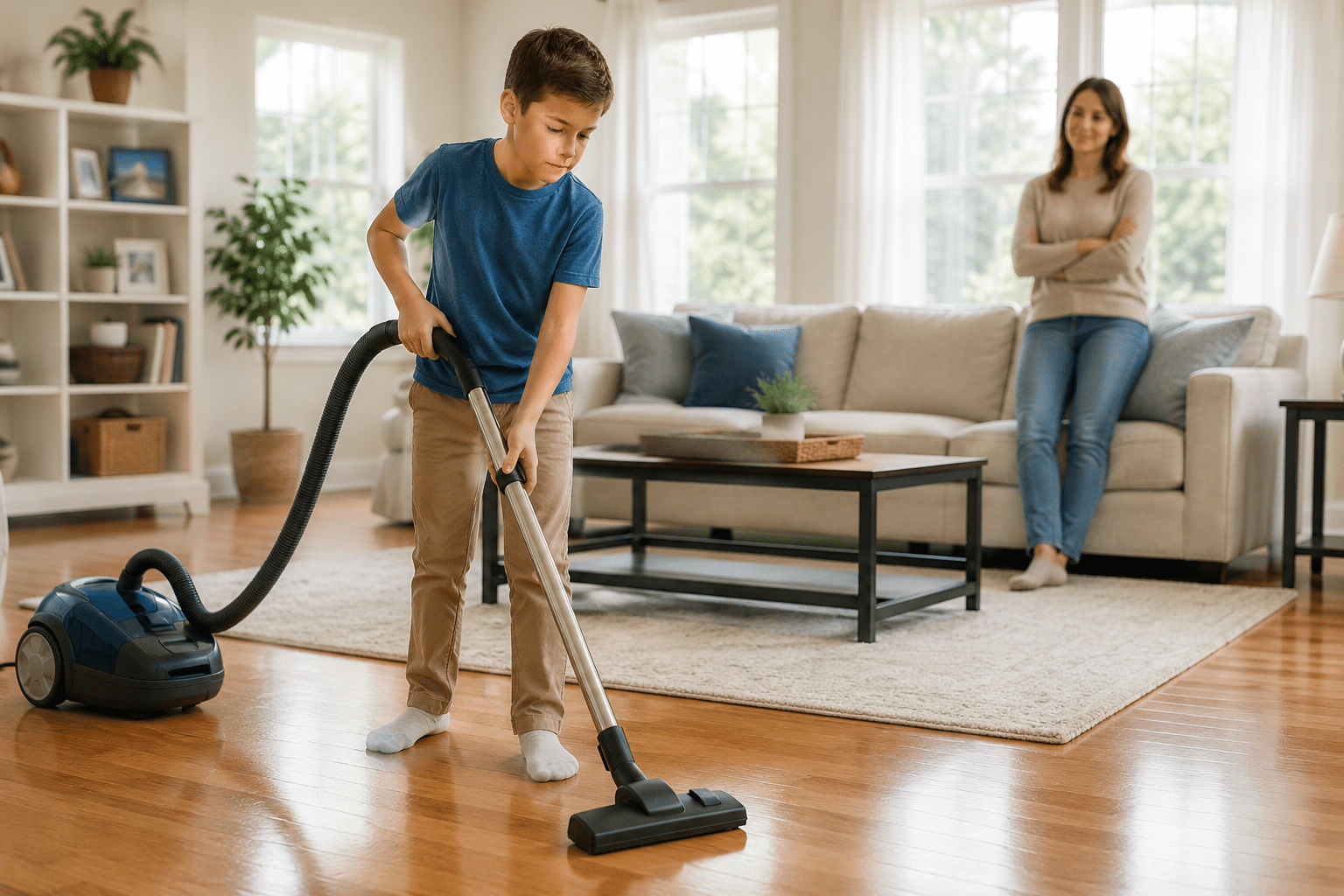
This responsibility chart for kids by age gives families a clear starting point without turning chores into nagging, arguing, or doing everything yourself because it feels faster. Children learn responsibility the same way they learn manners: through clear expectations, steady practice, and patient correction. For related age-based guidance, see our manners by age guide and printable checklist. According to the American Academy of Pediatrics, assigning age-appropriate chores helps children develop self-care skills, time management, and respect for others. Use the chart below to build self-care, household duties, school habits, respect, and character one stage at a time.
📊 Responsibility Chart for Kids by Age: Complete Guide
Ages 2–3: Learning to Help
Ages 4–5: Following Simple Routines
👕 Self-Care
- Wash hands and face without help
- Brush teeth with reminders
🏠 Home Duties
- Put dirty clothes in hamper
- Help set the table
📚 School & Learning
- Listen to stories and answer questions
- Practice alphabet and counting
🤝 Manners & Character
- Use please, thank you, excuse me with fewer reminders
- Apologize when told to
Ages 6–8: Building Daily Habits
👕 Self-Care
- Get dressed independently
- Shower with minimal help
- Make the bed
🏠 Home Duties
- Clear their own dishes
- Feed pets or water plants daily
📚 School & Learning
- Pack own backpack
- Complete homework and turn in papers
🤝 Manners & Character
- Use please and thank you consistently
- Apologize and understand why
Ages 9–11: Taking Ownership
👕 Self-Care
- Get ready for bed/school independently
- Keep bedroom organized
🏠 Home Duties
- Fold and put away laundry
- Take out trash or help with yard work
📚 School & Learning
- Manage homework without reminders
- Organize school materials
🤝 Manners & Character
- Use manners automatically
- Apologize genuinely and make amends
Ages 12–14: Managing Time & Choices
👕 Self-Care
- Manage their own laundry schedule
- Deep-clean room regularly
🏠 Home Duties
- Prepare simple meals or help plan meals
- Help with household projects
📚 School & Learning
- Manage planner independently
- Track assignments and prepare for tests
🤝 Manners & Character
- Use respectful words with peers and adults
- Help younger siblings
💰 Time & Money
- Use a planner; understand time management
- Earn and save allowance
- Follow screen-time rules; manage digital devices
Ages 15–18: Preparing for Adulthood
👕 Self-Care
- Manage their own laundry and personal care
- Help with household management
🏠 Home Duties
- Plan and prepare family meals
- Manage household projects independently
📚 School & Learning
- Manage full academic load and college/career prep
- Seek help proactively
🤝 Manners & Character
- Model respectful behavior for younger people
- Keep promises and follow through
💰 Time & Money
- Manage complex schedules and projects
- Budget and understand earning/saving
- Make wise digital choices; understand privacy
🏃 Implementation Tips for Success
Research from the Child Mind Institute shows that parents who start small, teach clearly, and use consistent routines see the fastest results. Here are the eight most effective strategies:
Start Small Pick 1-2 responsibilities. Add more as they master what they have.
Teach First Show HOW to do the task. Patience in teaching pays off.
Consistency Wins Done imperfectly but regularly beats perfection done once.
Use Routines “After breakfast, load the dishwasher” works better than reminders.
Catch Them Right Praise effort and follow-through. Name the behavior.
Use Natural Lessons Let safe, age-appropriate results teach. These lessons stick better than lectures.
Celebrate Progress It’s a marathon. Acknowledge improvements and effort.
Connect to Respect Help them see doing their part shows respect for the family.
❓ Frequently Asked Questions
