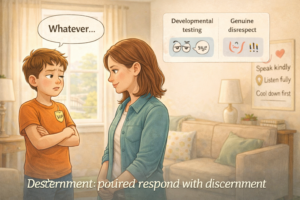
Does the sharp tone sting? Does the dismissive eye-roll feel like a personal affront? For any parent navigating the complex journey of raising a child, these moments can be confounding. It’s easy to find yourself caught in a cycle of frustration, questioning if the behavior is a fleeting phase or something more, and struggling to define what is disrespect in a way a child can truly understand. You worry about the future, hoping to raise a kind, considerate adult, but the daily power struggles feel anything but gracious.
This guide is designed to bring clarity and confidence to your response. We will move beyond a simple definition to help you master the art of discernment-distinguishing developmental testing from genuine disrespect. You will uncover the root causes behind your child’s actions and learn poised, effective strategies to address them without escalating conflict. Step into a more peaceful approach, one that empowers you to not only correct challenging behavior but to truly cultivate a culture of mutual respect in your home.
Key Takeaways
- Move beyond a simple definition of what is disrespect by learning to view it as a specific behavior-not a character flaw-which is the first step toward a more effective response.
- Discover the underlying needs and developmental reasons behind disrespectful behavior to address the root cause, not just the symptom.
- Sharpen your ability to recognize the subtle and overt signs of disrespect, from dismissive body language to challenging tones, to intervene with poise and purpose.
- Master a set of calm, consistent strategies that teach and guide, transforming challenging moments into opportunities to cultivate a family culture of mutual respect.
Beyond the Dictionary: Defining Disrespect in Children
When your child rolls their eyes or uses a sharp tone, it’s easy to feel a sting of frustration. But to truly address the behavior, we must first understand: what is disrespect? At its core, disrespect is any behavior that demonstrates a lack of consideration for another person’s feelings, authority, or presence. It is crucial to view these moments not as a reflection of your child’s character, but as a temporary lapse in grace-an opportunity to guide them back toward more gracious communication.
Understanding disrespect requires a nuanced perspective. The context-a child’s age, their intention, and the specific situation-is paramount. A toddler’s outburst is a developmental phase, not a calculated slight. A pre-teen’s sarcastic remark might be a clumsy attempt at humor. More often than not, these actions signal an unmet need or a lagging skill, such as difficulty regulating emotions or communicating frustration effectively.
Intentional vs. Unintentional Disrespect
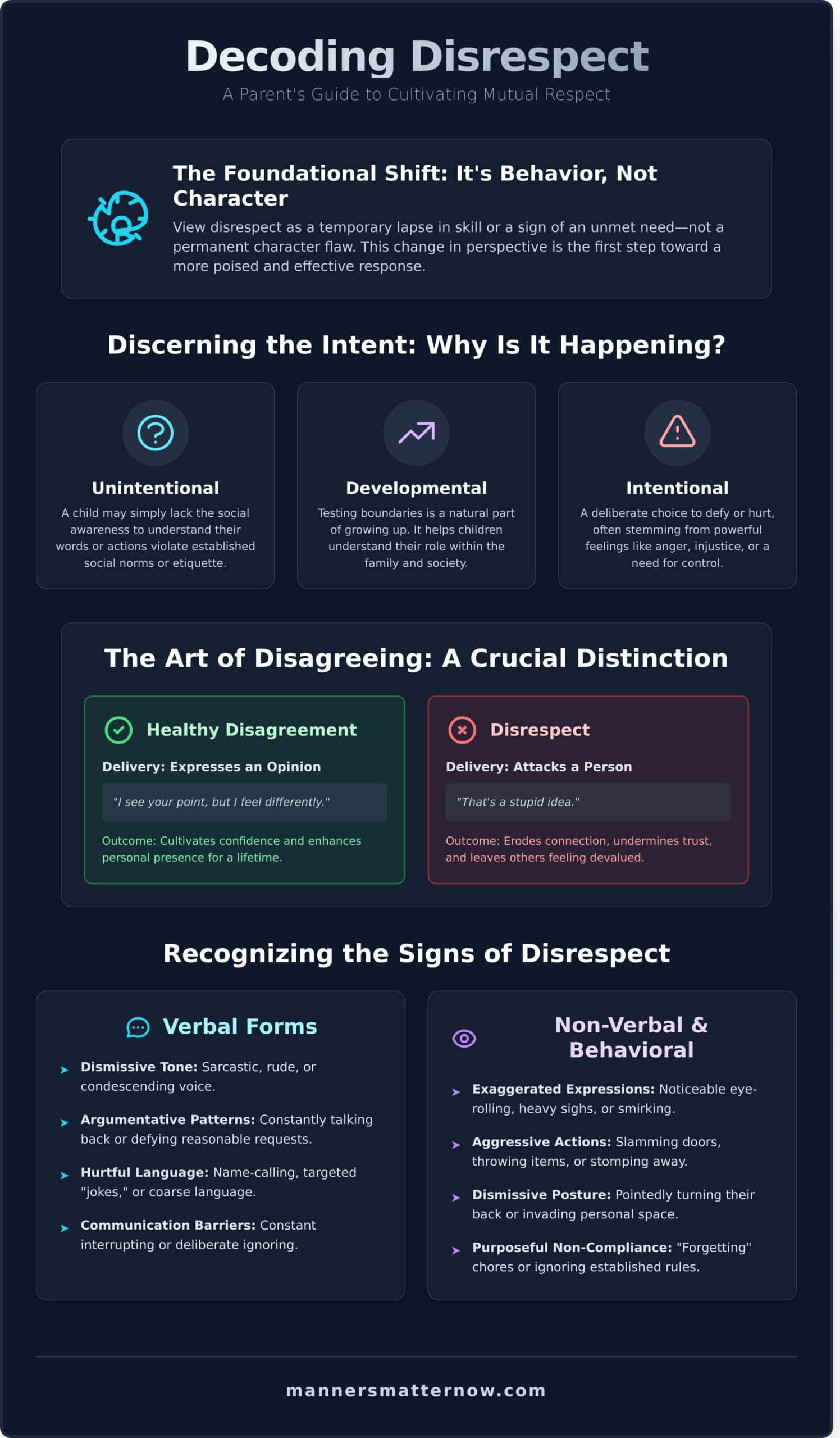
Discerning the root of a disrespectful act empowers you to respond with wisdom and poise. These behaviors generally fall into three categories:
- Unintentional: A child may simply lack the social awareness to understand that their words or actions violate established social norms or etiquette.
- Developmental: Testing boundaries is a natural and necessary part of growing up, helping children understand their role within the family and society.
- Intentional: This is a deliberate choice to defy or hurt, often stemming from powerful feelings like anger, injustice, or a need for control.
Disrespect vs. Healthy Disagreement
We want to raise confident children who can articulate their own thoughts and opinions. The goal is not to suppress disagreement but to elevate how it is expressed. The true distinction between healthy debate and disrespect lies in the delivery. It’s the difference between “I see your point, “I see your point, but I feel differently,” anda.” Framing this distinction empowers your child, teaching them the invaluable art of disagreeing with respect-a skill that will cultivate confidence and enhance their personal presence for a lifetime.
What Disrespect Looks Like: Common Signs and Examples
Disrespect manifests in myriad ways, from subtle gestures to overt defiance. To truly understand what is disrespect, we must look beyond a single action and recognize the pattern of behavior that leaves another person feeling devalued, unheard, or invisible. Cultivating this awareness is the first, most crucial step for any parent or educator dedicated to fostering an environment of mutual esteem and gracious communication. These actions, whether intentional or not, erode connection and undermine trust.
Verbal Forms of Disrespect
The spoken word holds immense power to either build or diminish. While a single sharp comment may be an isolated incident, a consistent pattern of verbal disrespect signals a deeper issue. Pay close attention to not just the words used, but the intent and tone behind them. Common examples include:
- A dismissive tone: Using a rude, sarcastic, or condescending tone of voice that implies the speaker is unimportant or foolish.
- Argumentative patterns: Habitually talking back, arguing about every request, or engaging in blatant defiance of clear, reasonable instructions.
- Hurtful language: Employing name-calling, targeted “jokes” at someone’s expense, or using inappropriate and coarse language.
- Communication barriers: Constantly interrupting when someone is speaking or deliberately ignoring questions to invalidate their presence.
Non-Verbal and Behavioral Disrespect
Often, the most profound disrespect is conveyed without a single word. Body language and actions can communicate disdain, frustration, and a complete lack of regard for others. These behaviors can be just as damaging as verbal insults, as they silently reject authority and connection. This can escalate into more challenging patterns, where a child becomes consistently defiant and disrespectful, often signaling a deeper need for guidance. Key non-verbal signs include:
- Exaggerated expressions: Noticeable eye-rolling, heavy, theatrical sighing, or smirking in response to a request.
- Aggressive actions: Slamming doors, throwing items, or stomping away to express displeasure in a physically intimidating manner.
- Dismissive posture: Invading personal space to intimidate or pointedly turning their back while you are speaking to them.
- Purposeful non-compliance: “Forgetting” to complete chores, ignoring established rules, or failing to follow through on commitments.
Uncovering the Roots: Why Do Children Act Disrespectfully?
To truly address challenging behavior, we must elevate our perspective. Once we move beyond simply defining what disrespect is, we can explore the fundamental disrespect as a symptom of an underlying issue, empowering us. Understanding the root cause is the essential first step toward cultivating a lasting solution and restoring harmony in your home.
Communicating an Unmet Need
Often, what appears as disrespect is simply a child’s unrefined attempt to communicate a deeper need. Before reacting, consider if their behavior is a signal for one of the following:
- A bid for connection: Even negative attention can feel better to a child than feeling ignored or disconnected from a parent.
- A need for agency: Feelings of powerlessness can lead to defiant behavior as a child seeks to establish a sense of control over their world.
- Emotional overflow: Lacking the tools to gracefully manage big feelings like frustration or disappointment, children may lash out.
- Feeling unheard: A child who feels their opinions or feelings are consistently dismissed may resort to disrespectful language to be heard.
A Lagging Skill or Learned Behavior
Gracious communication is a cultivated art, not an innate trait. Disrespect can emerge when a child is still developing crucial competencies or mirroring behaviors they have observed. This can stem from modeling-witnessing disrespectful interactions at school or in media-or from unclear expectations at home. When boundaries are inconsistent, it becomes difficult for a child to master the protocol of respectful engagement.
Developmental Stages
A child’s age profoundly influences their capacity for self-control and social awareness. Toddlers and preschoolers, for instance, are driven by impulse, not malice. Tweens and teens are navigating a critical developmental stage of seeking independence, which often involves testing limits and questioning authority. This pushback, while challenging, is a natural and necessary part of their journey toward forging their own identity.
By shifting our focus from the action itself to the reason behind it, our understanding of what is disrespect transforms. It ceases to be a battle of wills and becomes an opportunity to teach, connect, and empower. This empathetic approach is the cornerstone of building a family culture rooted in mutual poise and understanding.
How to Respond and Cultivate a Culture of Respect
Navigating moments of disrespect is less about winning a battle and more about cultivating a lifelong competency: the art of gracious communication. Your response is a powerful teaching tool. The goal is not to impose control, but to build your child’s character, enhance their social awareness, and ultimately, strengthen your relationship. By approaching these instances with poise and a clear strategy, you transform a challenging moment into a foundational lesson in empathy and mutual respect.
In-the-Moment Responses
When disrespect occurs, your immediate reaction sets the tone. The key to a productive outcome lies in your own composure, which prevents the situation from escalating into a power struggle. Focus on these steps to guide the conversation with grace and authority.
- Maintain Your Poise: A calm, neutral tone is your greatest asset. It models emotional regulation and keeps the focus on the issue at hand.
- State the Boundary Clearly: Use a simple, firm statement. For example, “We don’t speak to each other that way in our family.” This is a clear, non-negotiable standard.
- Address the Behavior, Not the Child: Frame your correction around the action. Say, “That tone of voice is disrespectful,” rather than, “You are disrespectful.” This separates the behavior from their identity.
- Postpone if Necessary: If emotions are running high for either of you, it’s wise to say, “We will discuss this in ten minutes when we are both calm.”
Proactive, Long-Term Strategies
True respect is not taught in a single correction; it is woven into the fabric of daily life. Children learn far more from what you do than what you say. By modeling empathy and setting clear expectations, their understanding of what is disrespect transforms from a list of forbidden words to a genuine appreciation for others’ feelings. Create clear family rules about communication and, most importantly, live by them yourself. To elevate this practice from a lecture to an engaging activity, Our Role Play Scenario Cards make practicing respectful responses fun.
Using Consequences That Teach
When a boundary is crossed, the goal is not to punish but to guide your child toward repair and understanding. Effective consequences are logical and restorative, teaching them how their actions impact others. This helps a child understand not just what is disrespect, but also how to mend the connection it damages. Focus on repair, such as offering a sincere apology or doing something kind for the person they hurt. Discuss what could be done differently next time to empower them with better strategies. Guiding a child through this process equips them with crucial life skills. The Apology & Repair Toolkit gives kids the words they need to mend connections with grace and sincerity.
Transforming Conflict into Connection: Your Path to a Respectful Home
Navigating the landscape of childhood behavior requires a perspective that moves beyond simple definitions. Ultimately, understanding what is disrespect is less about labeling an action and more about recognizing it as a crucial opportunity for connection and teaching. By looking deeper into the roots of these behaviors and responding with empathy and consistent boundaries, you transform challenging moments into powerful lessons in mutual consideration and strength.
To empower you on this journey, we invite you to explore our ready-to-use digital resources. Designed to build lifelong social skills in children and trusted by families, schools, and community leaders, our toolkits provide the guidance you need to lead with confidence and grace. Ready to elevate your approach and nurture a more harmonious family dynamic? Discover our printable toolkits to cultivate respect and kindness at home.
Remember, cultivating a culture of respect is a profound investment in your family’s future. Every intentional step you take fosters a legacy of grace, confidence, and connection that will last a lifetime.
Frequently Asked Questions
Is my toddler’s ‘no!’ phase a sign of disrespect?
A toddler’s emphatic “no!” is rarely a sign of disrespect but rather a crucial developmental milestone. They are discovering their autonomy and learning that they are a separate individual with their own preferences. This phase is their first step in cultivating a sense of self. Instead of viewing it as defiance, see it as an opportunity to model gracious communication, gently guiding them toward more polite ways to express their budding independence and preferences.
What is the difference between disrespect and a child just having a bad mood?
The distinction lies in intent and target. A bad mood is an internal emotional state-frustration or fatigue-that may result in short tempers or withdrawal. Understanding what is disrespect involves recognizing a deliberate action or statement aimed at demeaning or challenging another person. While a child in a foul mood needs empathy and space, a disrespectful act requires a calm but firm response to correct the behavior and reinforce the importance of gracious interaction.
How should I handle disrespectful behavior when we are in public?
When faced with disrespect in public, your own poise is paramount. Avoid a public confrontation, which can escalate the situation and undermine your authority. Instead, calmly and quietly remove your child from the immediate environment. Find a private space to address the behavior directly and concisely, stating that the conduct was unacceptable and will be discussed further at home. This approach maintains dignity for both of you while clearly marking the boundary of acceptable public deportment.
My child is respectful to me, but not to their teacher. What should I do?
This situation calls for a partnership with the teacher to present a united front. Schedule a meeting to understand the specific behaviors and align on a consistent strategy. Reinforce to your child that the principles of respect and graciousness we cultivate at home are not optional; they are essential competencies for every environment. This consistent message from both home and school is key to helping them master the art of appropriate social conduct and build a positive presence.
At what age can children truly understand the concept of respect?
While toddlers can learn respectful actions through modeling, the foundational understanding of empathy begins around ages three to four. A more abstract comprehension of what is disrespect and its social implications truly begins to solidify between ages seven and nine. During these years, you can have more nuanced conversations about why showing respect is a cornerstone of building strong, positive relationships and is essential for gracious living in a complex world.
Can constant disrespectful behavior be a sign of a more serious issue?
Indeed, a persistent pattern of disrespect, especially if it is a sudden change or is unusually intense, can signal an underlying challenge. Issues such as anxiety, learning difficulties, or significant stress can manifest as defiant behavior. If your gentle corrections and consistent boundaries are not effective, seeking guidance from a pediatrician or child psychologist is a wise and supportive step to ensure your child has all the tools they need to flourish with confidence and poise.
