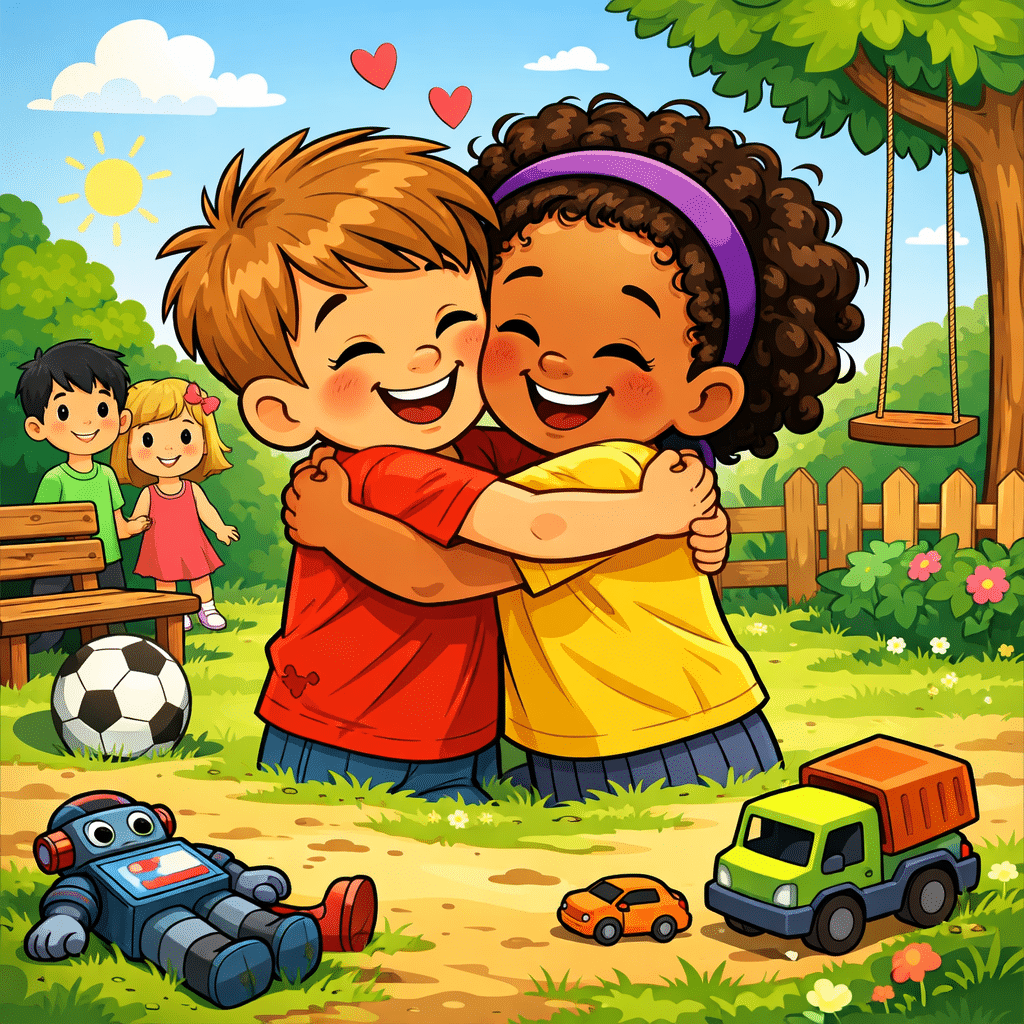
An apology for kids isn’t just about saying ‘I’m sorry.’ A meaningful apology helps children understand what they did wrong, make amends, and rebuild trust. When kids learn to apologize properly, they develop empathy and responsibility. The Apology & Repair Toolkit uses the following four‑step framework, backed by parenting experts and social‑emotional learning research, to teach children how to repair relationships.
Why genuine apologies matter
Forced apologies can be hollow; they often teach kids to mutter “sorry” without understanding why it’s needed. A real apology requires reflection and empathy. Research suggests that when children take responsibility for their actions, admit the specific wrong, and commit to doing better, their apology is more likely to heal hurt feelings. Helping kids practise this process builds character and strengthens relationships.
The four steps
- “I’m sorry for…” — be specific. Start by naming what happened. Instead of a vague “Sorry for everything,” encourage your child to identify the specific action that hurt someone. This shows the other person that they understand the offense. For example, “I’m sorry for knocking over your tower.”
- “This is wrong because…” — acknowledge the impact. Explain why the action was hurtful. Empathy grows when children recognize how their choices affect others. You might prompt, “This was wrong because it ruined your game and made you upset,” which helps the child see the situation from the other person’s perspective.
- “In the future I will…” — plan for change. A sincere apology includes a commitment to different behaviour. Encourage children to think of what they will do next time, such as “In the future I will be more careful around your toys,” or “I will ask before using your things.” Focusing on positive actions rather than what they won’t do reinforces self‑control.
- “Will you forgive me?” — invite forgiveness. Finally, the child should ask for forgiveness, giving the other person time to respond. Asking “Will you forgive me?” acknowledges the hurt and invites reconciliation. Remind your child that forgiveness takes time; it’s okay if the other person isn’t ready immediately.
Tips for parents and caregivers
- Model the steps. Children learn by watching. When you make a mistake, follow the same process and apologise to your child. This shows that everyone, including adults, can own up and repair.
- Practise when emotions are calm. Role‑play common scenarios when everyone is calm. Practising ahead of time reduces pressure during real conflicts and helps kids recall the steps.
- Highlight what went well. Praise children for taking responsibility and thinking about how to make things better. Positive reinforcement encourages them to use the four steps in everyday situations.
Call to action
Teaching a thoughtful apology is one of the most powerful gifts you can give your child. The Apology & Repair Toolkit includes printable scripts, role‑play cards, and family exercises to make this process second nature. Start using it today to help your child build empathy and learn how to make amends.
